
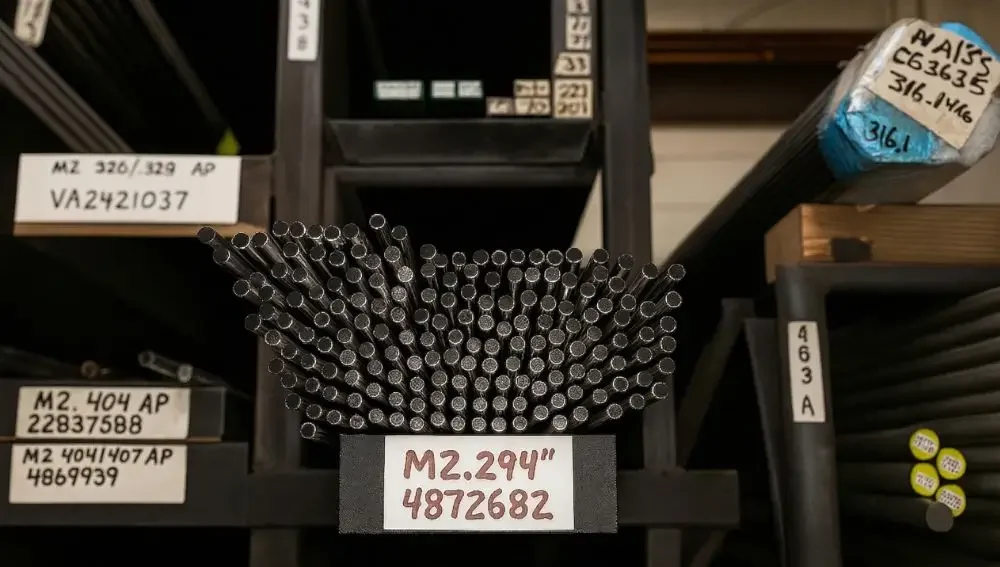
Evaluating Alternatives to M2 High-Speed Steel: M1 and M7
Performance, Cost, and Strategic Advantages in a Volatile Tungsten Market
M2 high-speed steel (HSS) has long been a dominant material for cutting tools thanks to its balance of hot hardness, wear resistance, and toughness. However, M2’s performance heavily depends on tungsten, a strategic and increasingly volatile raw material.
As tungsten prices continue to rise and supply disruptions become more common, manufacturers are exploring alternatives that can maintain tool performance while enhancing cost stability and supply-chain resilience.
Two viable alternatives are:
- M1 – a lower tungsten molybdenum-based HSS
- M7 – a lower tungsten high-wear molybdenum-based HSS
This document outlines the benefits, performance differences, and business implications of transitioning from M2 to M1 and from M2 to M7, especially under current tungsten market conditions.
Metallurgical Comparison
M2: Industry Standard with Heavy Tungsten Dependency
- Contains 6.1% tungsten
- High hot hardness and wear resistance
- Widely used in drills, taps, end mills, and form tools
- Material cost is highly sensitive to tungsten pricing
M1: Tungsten-Light, Cost-Stable Alternative
- 1.75% tungsten
- Higher molybdenum content
- Tougher and easier to grind than M2
- Performance suitable for many M2 applications, especially non-extreme cutting
- Most economical of the three steels
M7: High-Performance, Reduced-Tungsten Alternative
- 1.75% tungsten
- Higher carbon and molybdenum
- Better wear resistance, red hardness, and edge durability than M1
- Stronger for high-demand applications than M1
- More stable cost profile than M2 due to reduced tungsten dependency
Performance Comparison Table
| Property | M1 (No W) | M2 (Std) | M7 (Low W) |
| Tungsten Content | 1.75% | 6.1% | 1.75% |
| Wear Resistance | Moderate | High | Very High |
| Red Hardness | Lower | High | High |
| Toughness | Higher than M2 | Moderate | Moderate-High |
| Grindability | Best | Moderate | Moderate |
| Cost Stability | Very High | Low (tungsten-volatile) | High |
| Cutting Severity Suitability | Low/Medium | Medium/High | Medium/High |
| Ideal Uses | Form tools, punches, broaches | Universal cutting | Taps, mills, saws, high-load cutting |
Benefits of Switching from M2 to M1
1. Less Tungsten Exposure = Maximum Cost Stability
Because M1 contains much less tungsten, its price is more insulated from:
- Geopolitical disruptions
- Mining restrictions
- Export controls
- Defense and aerospace tungsten demand
- Commodity speculation
This makes M1 extremely attractive in long-term supply contracts and cost-sensitive programs.
2. Lower Alloy Cost & Improved Profit Margin
Limiting tungsten significantly reduces:
- Raw material cost
- Price volatility
- Inventory carrying cost
Shops should see material savings when converting applicable tools from M2 to M1.
3. Higher Toughness & Reduced Breakage
M1’s lower tungsten offers:
- Lower brittleness
- Better shock resistance
- Reduced catastrophic tool failures
This is beneficial for:
- Punching and stamping
- Forming tools
- Broaching
- Low- to medium-speed cutting
4. Easier Machining and Grinding
M1’s lower carbide density gives:
- Faster grinding cycles
- Longer wheel life
- Easier reconditioning
Production environments benefit from lower labor and consumable costs.
Benefits of Switching from M2 to M7
1. Reduced Tungsten Content = Lower Price Volatility
M7 uses much less tungsten than M2, immediately reducing exposure to raw material fluctuations while maintaining HSS cutting performance.
2. Higher Wear Resistance Than M1
M7 is ideal when the application requires performance closer to M2, including:
- Heavy-duty cutting
- Hard or abrasive materials
- Higher cutting temperatures
3. Strong Edge Retention
High carbon and molybdenum content produce:
- Excellent hot hardness
- Superior edge holding
- Longer tool life than M1 in severe cutting
4. Good Compromise When M2 Performance Is Needed
If you want to reduce tungsten reliance without sacrificing real cutting performance, M7 often becomes the balanced choice.
6. When Each Material Makes Business Sense
Choose M1 when you want:
- Lowest material cost
- Highest toughness
- Tools used at moderate speeds or loads
- Simpler grinding and reconditioning
Choose M7 when you want:
- M2-like performance
- Lower tungsten reliance
- Better edge durability than M1
- Tools that need strong hot hardness
- A safer transition from M2 with minimal risk
7. Why Current Tungsten Market Conditions Make Switching Smart
Global tungsten supply has become increasingly unstable due to:
- Limitations on mine output in China
- Export limitations and geopolitical prioritization
- Growing military and aerospace demand
- Environmental restrictions are increasing mining costs
- Very limited Western tungsten mining investment
This results in:
- Higher tungsten prices
- Unpredictable cost swings
- Allocation risks during shortages
- Margin pressure for toolmakers
Switching to M1 limits this exposure.
Switching to M7 significantly reduces it.
Both transitions help:
- Stabilize forecasting
- Improve quote accuracy
- Protect margins
- Reduce supply-chain risk
- Provide a competitive pricing advantage
Conclusion
Switching from M2 to M1 or M7 is not only a technical decision—it is a strategic business move, especially as tungsten volatility increases.
M1 gives you:
- Lower tungsten dependence
- Lower material cost
- Higher toughness
- Best stability in the current market
M7 gives you:
- Lower tungsten dependence
- Higher performance than M1
- Capabilities close to M2
- Excellent durability for demanding applications
Bottom Line
For companies concerned about cost stability, supply risk, and long-term sustainability, transitioning select tools from M2 to M1 or M7 can strengthen both operational and financial performance. Ready to optimize your margins without sacrificing performance? Contact Griggs Steel to discuss how transitioning to M1 or M7 can strengthen your supply chain.